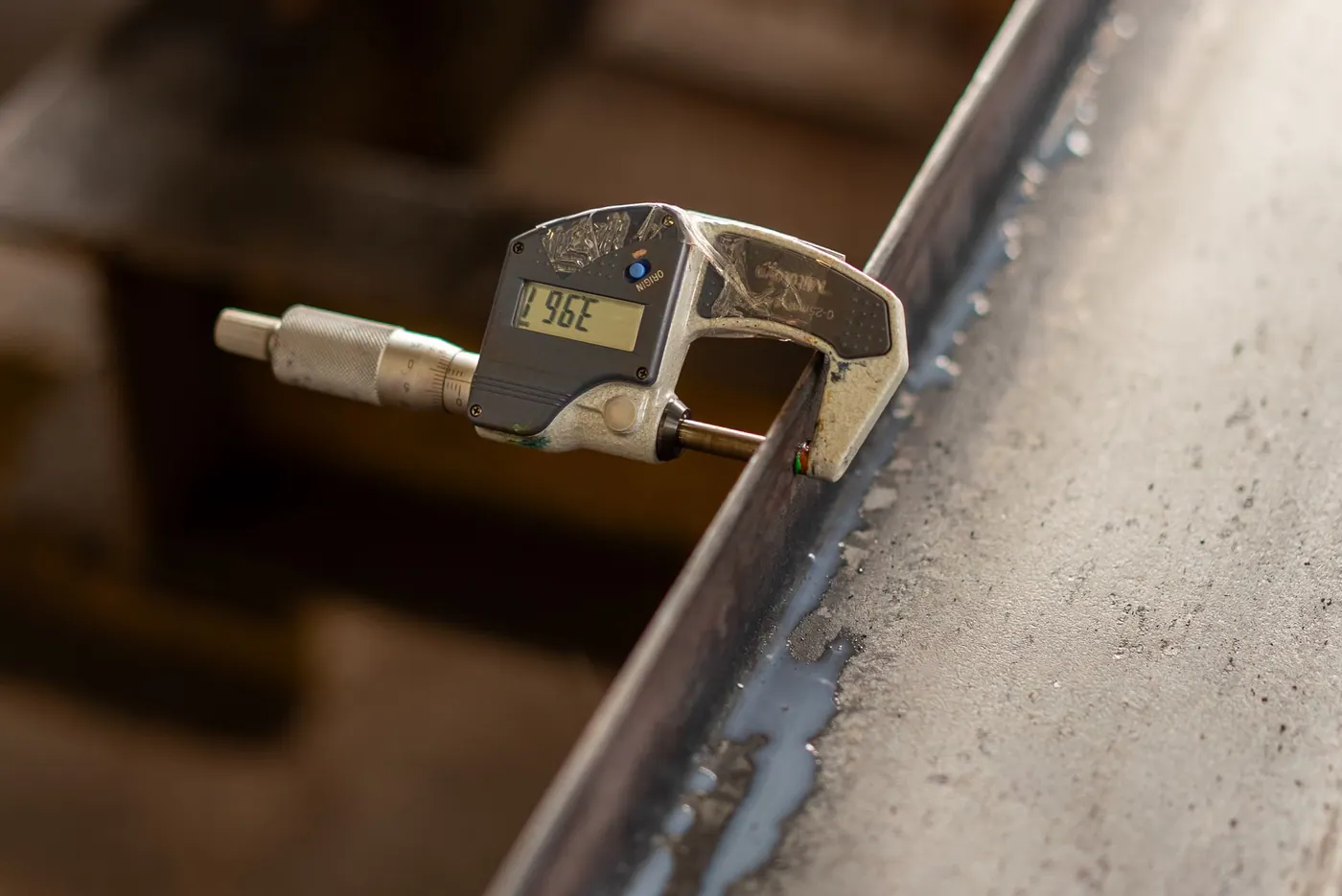
“Make it thicker” sounds like a simple quality instruction. It is not a complete engineering brief. A thicker wall changes the geometry of the straw, and its effect depends on what is held constant: the outside diameter, the internal opening, the material formulation or the overall product weight.
For buyers, the useful starting point is the failure they want to prevent. Is the straw collapsing during use, splitting during lid insertion, deforming in the carton or simply feeling too light? Each observation needs investigation. Adding material without identifying the mechanism can increase cost while leaving the real problem unresolved.
Understand the geometry before discussing strength
For an ideal circular tube with uniform wall thickness, the internal diameter is the outside diameter minus twice the wall thickness. If the outside diameter stays fixed, increasing the wall reduces the opening. If the opening must stay fixed, the outside diameter must increase instead.
Consider two hypothetical tubes with an 8.0 mm outside diameter. With a 0.4 mm wall, the nominal inside diameter is 7.2 mm. With a 0.6 mm wall, it is 6.8 mm. The ideal internal area falls from about 40.7 to 36.3 square millimetres, a reduction of roughly 11 percent.
The ideal cross-sectional material area rises from about 9.55 to 13.95 square millimetres, approximately 46 percent, assuming the same circular geometry. That does not mean the finished straw will cost 46 percent more or be 46 percent stronger. It shows that a small change in wall thickness can have a substantial geometric effect, while price and performance depend on additional factors.
Do not turn a geometry calculation into a performance claim
Material formulation, processing, surface condition, length, cut quality and use environment can all influence the finished article. A thicker wall made from a different formulation is not a controlled comparison. Neither is a longer straw compared with a shorter one when the buyer is judging bending behaviour.
Ask the supplier which variables it proposes to change and why. A useful development conversation might compare two wall specifications while holding the rest of the product constant, then evaluate the same cup, lid and beverage conditions. If several variables change at once, record them and avoid attributing the result solely to thickness.
The aim is not to derive a universal strength ranking from a catalogue. It is to select a product that meets a defined use requirement with an appropriate margin, supported by evidence for that exact specification.
Translate the complaint into a testable requirement
| Observed problem | Questions to investigate before increasing thickness |
|---|---|
| Straw bends during insertion | Does the tip suit the lid? Is the insertion route realistic? |
| Toppings block the opening | What is the actual internal passage and topping variation? |
| Straw changes during use | What are the temperature, drink composition and contact time? |
| Tube arrives deformed | What happened in packing, transport or storage? |
| Cut end feels rough | Is the issue cutting quality or the material surface? |
| Product feels too light | Is this a functional failure or a brand preference? |
Keep preference and failure in separate columns. A buyer may legitimately want a heavier feel, but that preference should not be presented as proof that a lighter product is unsafe or unsuitable. Similarly, a visually acceptable sample can still fail a functional requirement.
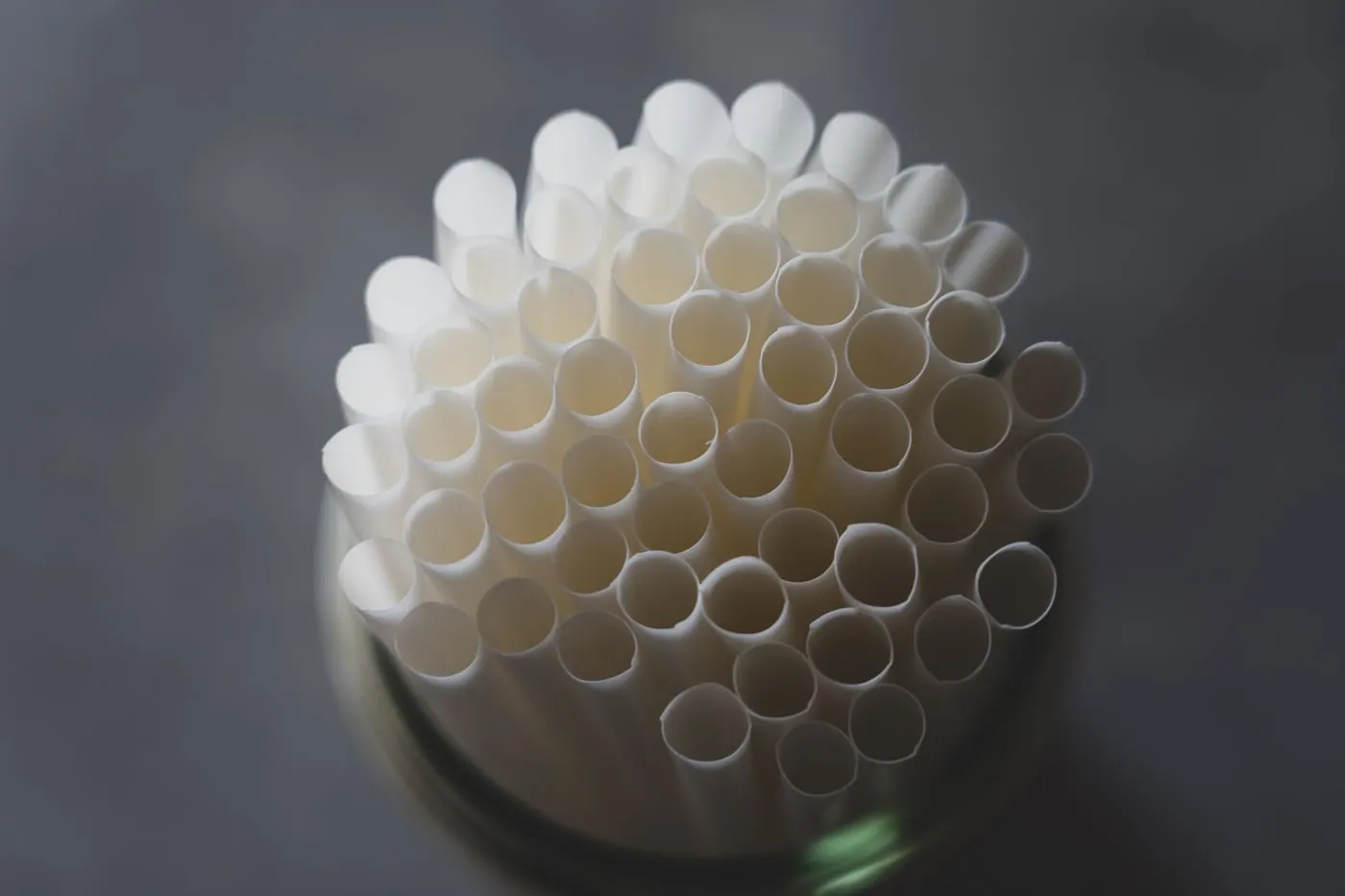
Agree how the wall will be measured
Thin or flexible articles can be distorted by measurement force. Ask the manufacturer how it measures wall thickness and internal opening, how many positions are relevant and how it handles ovality or unevenness. The method should be appropriate to the product and the tolerance being claimed.
Mitutoyo's measurement guidance for calipers discusses the importance of consistent measuring force. For straw inspection, a buyer should not assume that a handheld reading is exact merely because a digital display shows several decimal places.
measurement guidance for calipers
Record the agreed method in the specification or inspection instruction. If buyer and factory use different methods, compare results on shared samples before arguing about production variation. Repeatability is more useful than a tolerance neither party can verify consistently.
Evaluate the finished product in the intended application
Use the actual beverage, cup, lid and expected duration. Include the handling that is genuinely part of service, but do not test the straw as an ice-breaking tool unless that is a stated intended function. Record the point at which a problem occurs and keep representative failed samples.
Separate a practical screening trial from a formal test report. A few cups can help select between prototypes; they do not establish a statistically supported defect rate or certify a material. Where laboratory work is needed, define the question and conditions with the test provider rather than asking for a generic “strength test.”
If the product carries a compostability claim, a dimension or thickness change can also require a scope check. Ask the certificate holder whether the revised finished article remains covered. Do not assume that adding material is irrelevant simply because the ingredient list is unchanged.
Include packing and cost in the development decision
If outside diameter increases, the wrapper and carton arrangement may need revision. If only the internal opening changes, the straw may still fit the existing wrapper but behave differently with the drink. Review these consequences before approving the drawing.
Ask for the unit-price and shipping-data changes separately. This prevents a buyer from attributing every increase to material when some of it comes from packing or setup. It also reveals whether a proposed change creates a new stock code that will require its own forecast and minimum order.
For a distributor, consider how the new specification will be described to customers. A claim such as “extra thick” should be tied to a defined product feature, not used as a vague synonym for better quality. Customers need to know the dimensions and intended application that explain the benefit.
Write a specification around the required outcome
HiStraws can discuss custom dimensions from 10,000 straws. Send the current specification, the observed problem, the destination market and the application conditions. Photographs or measurements of the failure can help frame the development work, while samples allow the alternatives to be compared directly.
Samples are free, with shipping paid by the buyer. The final approval should connect the drawing, material code, test observations and packing specification. That is a stronger basis for ordering than “thicker is better,” because it states what the product needs to do and how both sides will recognize an acceptable result.
Research and purchasing analysis by HiStraws. Sources checked on 27 September 2026. Worked examples are illustrative, not price quotations or laboratory results.
Licensed reference photography. Images do not establish product composition, certification or ownership of the depicted facilities.