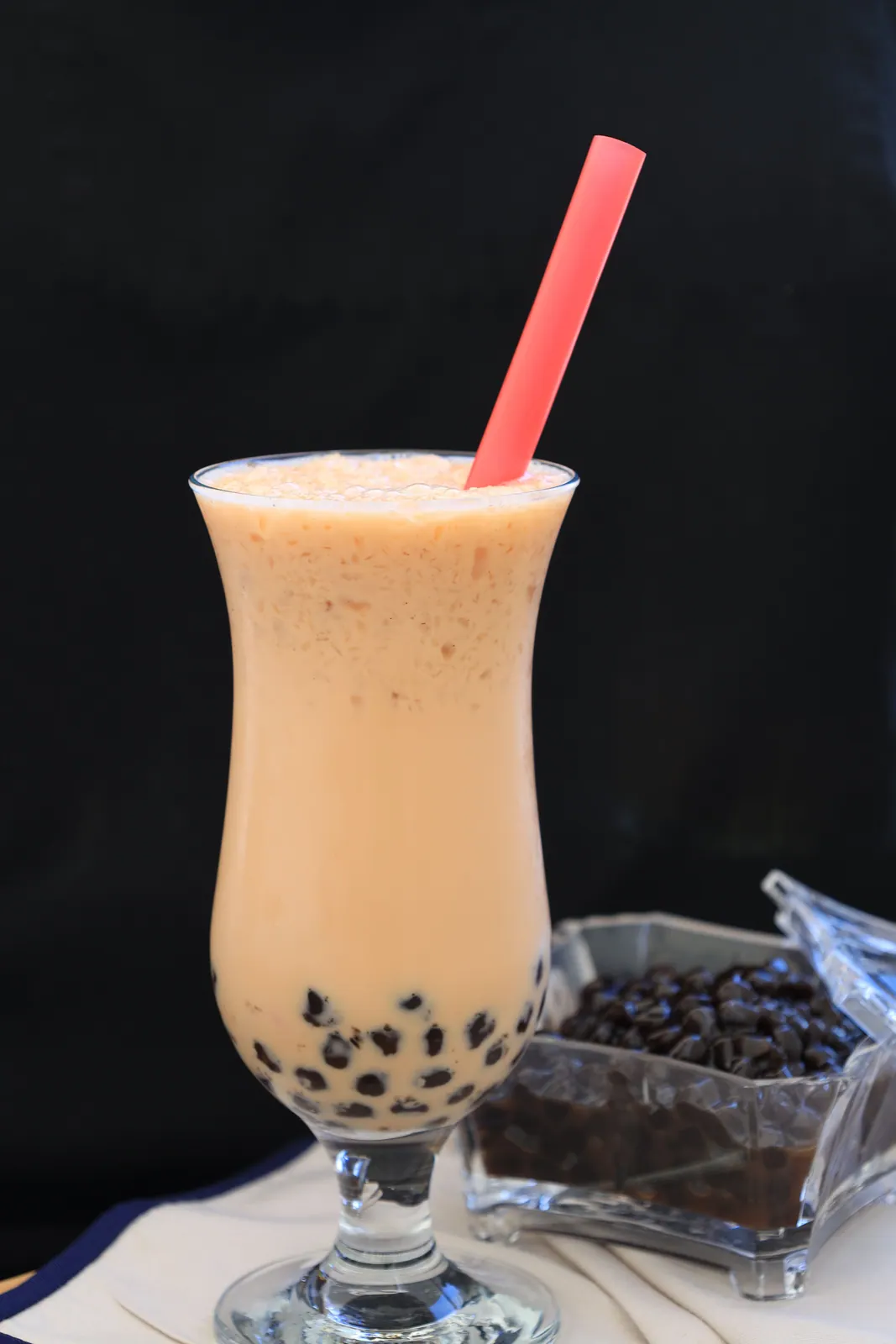
Two bubble-tea straws can both be sold as “12 mm” and still behave differently in the same drink. If that measurement describes the outside diameter, a thicker wall leaves a smaller passage for tapioca pearls. A customer does not experience the nominal specification; they experience the opening, the toppings and the resistance when they take a sip.
Choosing a biodegradable boba straw therefore requires more than selecting the largest size in a catalogue. Buyers need to connect the actual internal opening to the menu, cup, lid and expected service time. The right specification is the one that works across those conditions without unnecessary material, awkward handling or unsupported performance claims.
Read the dimensions as a system
For an ideal, round tube with a uniform wall, the inside diameter equals the outside diameter minus twice the wall thickness. This simple relationship explains why an outside measurement alone is incomplete. Real production also introduces tolerances, and the opening can be affected by ovality or the condition of a cut end.
As an illustrative calculation, a tube with a 12.0 mm outside diameter and a 0.5 mm wall has an 11.0 mm nominal inside diameter. Increasing the wall to 0.8 mm while keeping the outside diameter at 12.0 mm reduces the nominal opening to 10.4 mm. These dimensions are examples for explanation, not HiStraws stock specifications or a recommendation for a particular topping.
The corresponding ideal opening areas are about 95.0 and 84.9 square millimetres, calculated from the area of a circle. That is roughly an 11 percent reduction. It does not predict the exact drinking experience, but it shows why apparently small dimensional changes deserve attention when the opening is already close to the size of the toppings.
Measure the toppings you actually serve
Do not design around the dry pearl size on a supplier's bag. Review the cooked product at the point of service, including normal variation between batches and holding times. If the menu includes jelly, fruit pieces or several topping types, examine those too. An irregular piece can behave differently from a roughly round pearl of similar width.
Use the menu's most demanding realistic combination as one test condition. A drink containing a large topping, substantial ice and a thick base may reveal problems that a thin milk tea does not. Avoid creating an extreme recipe that the shop never serves; the purpose is to represent the business, not manufacture a dramatic failure.
Keep the preparation method consistent during the comparison. Otherwise a change in pearl cooking or beverage dilution can be mistaken for a change in straw performance. Record the topping batch and recipe alongside the straw sample code.
Separate passage, flow and seal puncture
| Question | Practical observation | Purchasing implication |
|---|---|---|
| Can toppings pass? | Repeated blockage with the actual recipe | Review usable opening and topping variation |
| Is sipping comfortable? | Excessive effort or interrupted flow | Compare the complete drink and tube geometry |
| Can the lid be opened? | Tip bends, splits or slips during insertion | Review end shape, material and lid compatibility |
| Does the straw remain usable? | Softening, cracking or loss of shape over time | Reassess the intended use conditions |
| Does it fit the service setup? | Poor reach, awkward storage or wrapper fit | Review length and packing format |
These are separate outcomes. A straw can pass pearls easily after insertion but struggle to puncture the film. Another can puncture the film effectively yet have a rough or damaged edge afterwards. Treating both as a single “strength” score hides the corrective action the supplier needs to take.
Check the measurement method before arguing about a decimal
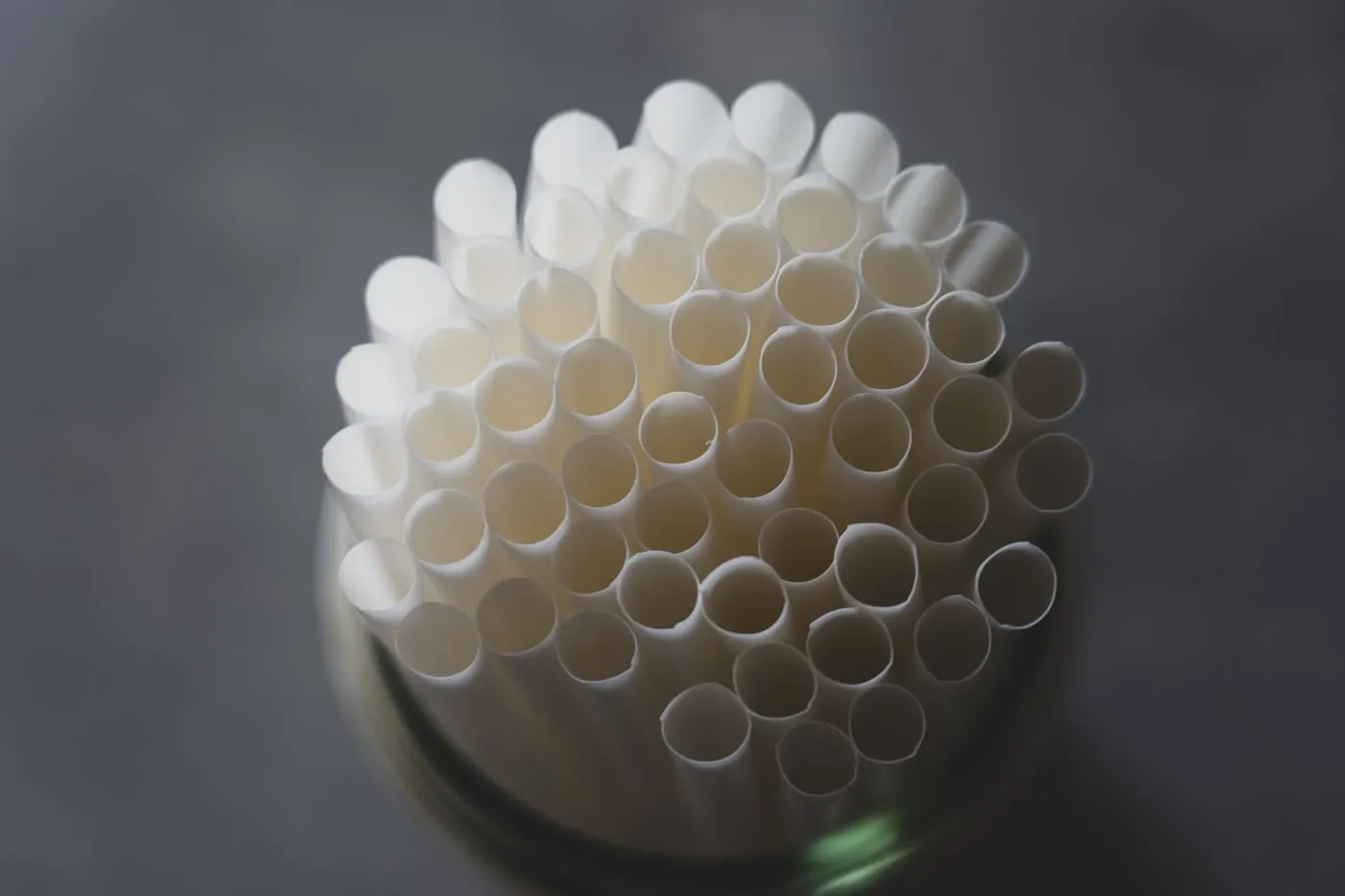
Thin-walled tubes can deform under excessive measurement force. Measure consistently and ask the manufacturer which method it uses for outside diameter, internal opening and wall thickness. Calipers are useful, but the contact geometry and force matter, especially for small openings and flexible samples.
Mitutoyo discusses measuring-force consistency and measurement error in its caliper guidance. The lesson for straw procurement is to agree the method as well as the number. A drawing with a tight tolerance is of limited value if buyer and factory measure the sample differently.
Record measurements at more than one position where appropriate, including the cut ends if they affect passage. Do not squeeze a sample until the reading matches the expected value. If the result is close to a functional limit, ask the quality team to choose an appropriate inspection method and confirm its repeatability.
Run a menu-based comparison before choosing a custom size
Begin with available stock options. Keep the beverage, cup and lid identical while comparing straw samples. Include both a fresh drink and a realistic later point in the customer's consumption window. Choose the observation times from the actual service experience; this article does not prescribe a universal hold time for biodegradable materials.
Write down blockage events, lid-puncture failures, visible damage and user comments separately. Use the same sample code throughout the test so a good result can be traced to the exact formulation and dimensions. Photograph a failure where it helps explain the mechanism, but do not turn one photograph into a claim about an entire material category.
A simple in-house trial is a screening exercise. It does not establish regulatory compliance, prove a defect rate for future production or replace a laboratory assessment where one is required. Its value is in identifying which option deserves the next stage of review.
Material claims need their own evidence
Terms such as plant-based, biodegradable and compostable answer different questions. A source ingredient does not establish the finished straw's disposal behaviour. The European Commission's explanation of biobased, biodegradable and compostable plastics makes those distinctions explicit. Keep the performance trial and environmental-document review as separate approval tasks.
explanation of biobased, biodegradable and compostable plastics
For a European destination, also check whether the proposed formulation falls within restrictions on single-use plastic straws before investing in a custom boba format. A large opening, a plant-derived ingredient or a compostability certificate does not by itself settle market access.
When a custom dimension is justified
A custom size is worth discussing when stock options cannot meet a demonstrated requirement: topping passage, cup reach, lid compatibility or a constrained dispenser. “We want a unique straw” is a branding preference; repeated failure in a documented service test is a technical reason. Both can inform a project, but they should not be confused when assessing cost and lead time.
HiStraws custom dimensions start at 10,000 straws. Send the destination market, cup and lid details, menu recipes, approximate topping dimensions and order quantity. Ask which stock alternatives can be sampled first. Samples are free, with shipping paid by the buyer. Choosing from evidence makes it easier to order a boba straw that suits the drink instead of relying on a diameter label that tells only half the story.
Research and purchasing analysis by HiStraws. Sources checked on 27 September 2026. Worked examples are illustrative, not price quotations or laboratory results.
Licensed reference photography. Images do not establish product composition, certification or ownership of the depicted facilities.