
A custom size can solve a real service problem. It can also create an unnecessary commitment if a stock option would have worked just as well. For a café brand, importer or hospitality buyer, the important distinction is between a demonstrated functional need and a preference that has not yet been tested.
The decision should come before wrapper artwork and launch scheduling. Length and diameter affect more than the appearance of the straw: they can change the internal opening, lid fit, packing arrangement and order quantity. Comparing a stock route with a custom route early gives the buyer a clearer view of what customization is buying.
Define the constraint that a stock product cannot meet
Start with the actual vessel and beverage. Record the cup height, lid opening, topping size where relevant and expected use conditions. If a current straw fails, describe the failure precisely. “Too short to reach comfortably above this lid” is more useful than “not premium enough.”
Then ask the supplier which existing specifications are available for the chosen material. Availability should be confirmed against the complete combination of dimensions, colour and packing. A common length may be stocked in one material but require production in another.
Try the nearest suitable stock options before specifying a new dimension. This is not an argument against customization. It is a way to establish the benefit of a custom product so the additional quantity, approval work and supply planning have a clear purpose.
Treat the internal opening as a separate requirement
Outside diameter is important for lid fit and handling. Internal opening matters for drink flow and toppings. If wall thickness changes while the outside diameter remains fixed, the opening changes too. Put the dimensions that matter to function on the same drawing.
Do not assume that a catalogue size is a tolerance statement. Ask which dimension the label describes and what range the supplier can hold. Where the product is flexible or thin-walled, agree a measurement method that does not distort the sample.
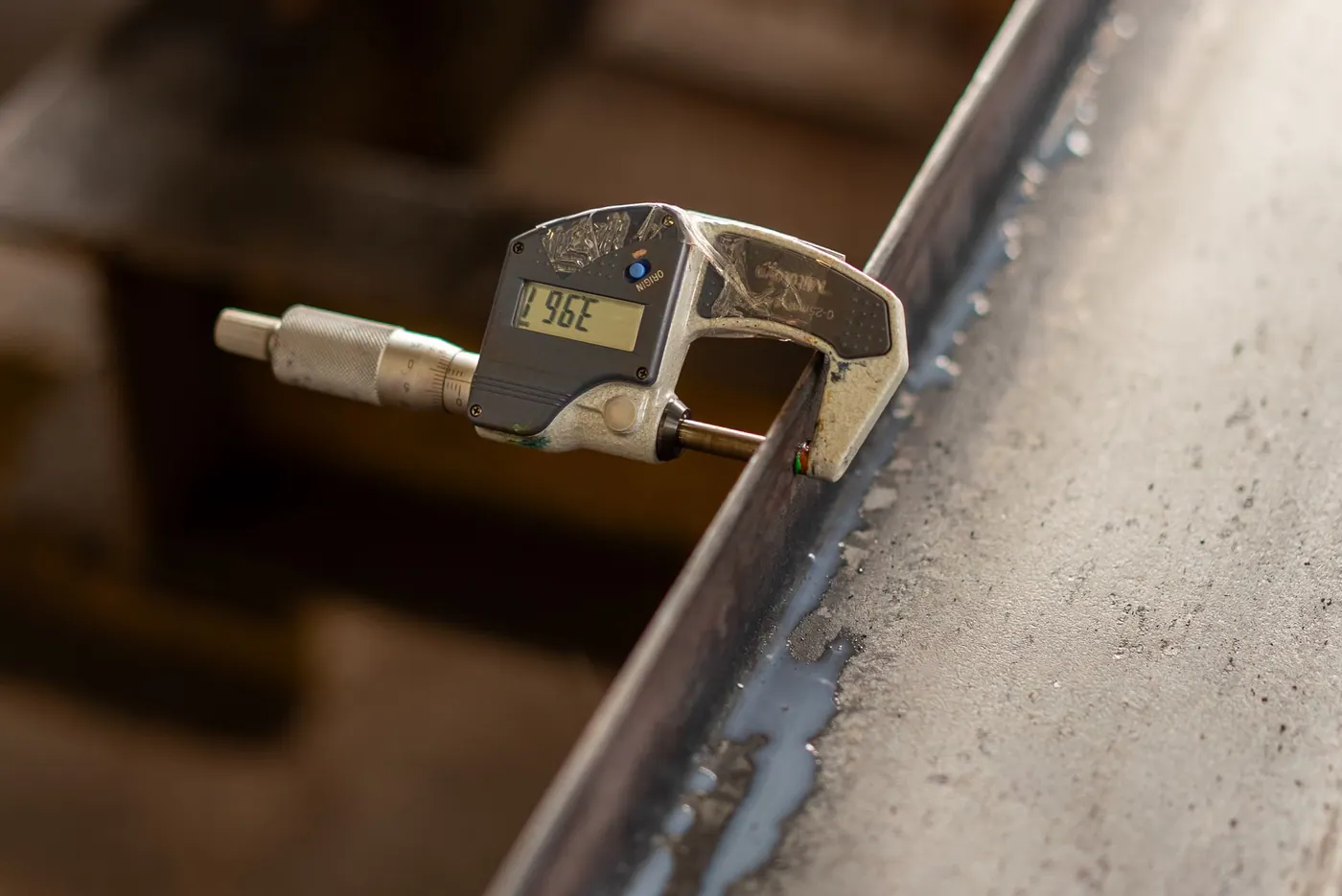
The Mitutoyo caliper guidance is useful background on measuring-force consistency. For a buyer, the key action is to make sure both sides inspect the same feature in a repeatable way. A decimal in a purchase order is not evidence of measurement capability.
Compare the two routes on more than lead time
| Decision area | Stock specification | Custom specification |
|---|---|---|
| Functional fit | Must be demonstrated in the actual application | Designed around a defined requirement, then validated |
| Availability | Confirm exact combination and current stock | Confirm production scope and schedule |
| Minimum quantity | Confirm the selected stock and packing option | HiStraws custom dimensions start at 10,000 |
| Packaging | Existing packing may be available | Wrapper and carton fit may need review |
| Repeat supply | Confirm continuity of the selected product code | Retain drawing, tolerances and approval reference |
| Change risk | Avoid undocumented substitutions | Control revisions and reapproval requirements |
An order can combine a stock straw with a custom wrapper. At HiStraws, wrapper printing starts at 2,000 straws, while custom dimensions and laser logos each start at 10,000. These thresholds describe different services. Confirm the quantity per product and artwork version rather than assuming one minimum applies to every combination.
Calculate whether the minimum quantity suits the demand
Suppose a buyer uses 2,000 straws per month of a particular specification. A 10,000-unit custom order represents five months of demand before any buffer or seasonal change. At 10,000 units per month, the same minimum represents one month. These simple examples show why the threshold should be assessed by product variant rather than by the brand's total straw purchases.
Now add the number of variants. A brand using three lengths and two artwork designs may not be able to treat all six combinations as one production quantity. Ask the factory to explain the grouping used in its quotation and where setup or minimum quantities apply.
Do not interpret months of demand as a shelf-life recommendation. Storage conditions and usable life need confirmation for the exact product and packing. The commercial question is whether the business can consume the order within the supplier's guidance and its own stockholding constraints.
Approve a drawing that can be used at receiving
The approved drawing should identify the product, revision, material code, length, relevant diameters, wall specification and end shape. Include only the tolerances needed to protect function and agreed appearance. Ask the supplier to flag any requirement that would change feasibility, cost or inspection effort.
Choose clear reference points. If one end is angled, state how length is measured. If an opening matters at the tip, identify that feature. Ambiguity at this stage becomes disagreement when the buyer measures a later delivery.
Keep a physical approved sample with the drawing. A sample alone cannot describe every allowable variation, and a drawing alone cannot capture every tactile or visual expectation. Together they provide a more useful reference for production and incoming checks.
Revisit packaging after the product changes
A longer or wider straw may need a different wrapper, inner box or outer-carton arrangement. Ask for the resulting carton dimensions and quantities before comparing freight. A small product change can alter shipping volume or outlet storage even if the piece-price change is modest.
Review artwork against the new finished wrapper rather than stretching the old file to fit. Check seal areas, logo position and readability. If a QR code or required text moves, repeat the relevant proof checks.
For transport protection, the ISTA testing guidelines emphasize selecting and interpreting a test in relation to its purpose. A buyer should discuss the actual shipment route and packing configuration with the supplier or test provider, not assume that any package test covers every custom size.
Use a custom size only after its advantage is clear
Approve the custom route when the stock trial demonstrates a meaningful gap and the proposed dimension addresses it. Record the evidence, the accepted sample and the commercial assumptions. If a stock option performs adequately, it may allow a simpler launch while branding is handled through the wrapper or outer box.
Send HiStraws the destination market, beverage, cup and lid details, desired dimensions and quantity by variant. Ask for suitable stock alternatives alongside the custom quotation. Samples are free, with buyer-paid shipping. This makes the decision concrete: what the available product can do, what needs to change and whether that change justifies a dedicated specification.
Research and purchasing analysis by HiStraws. Sources checked on 27 September 2026. Worked examples are illustrative, not price quotations or laboratory results.
Licensed reference photography. Images do not establish product composition, certification or ownership of the depicted facilities.