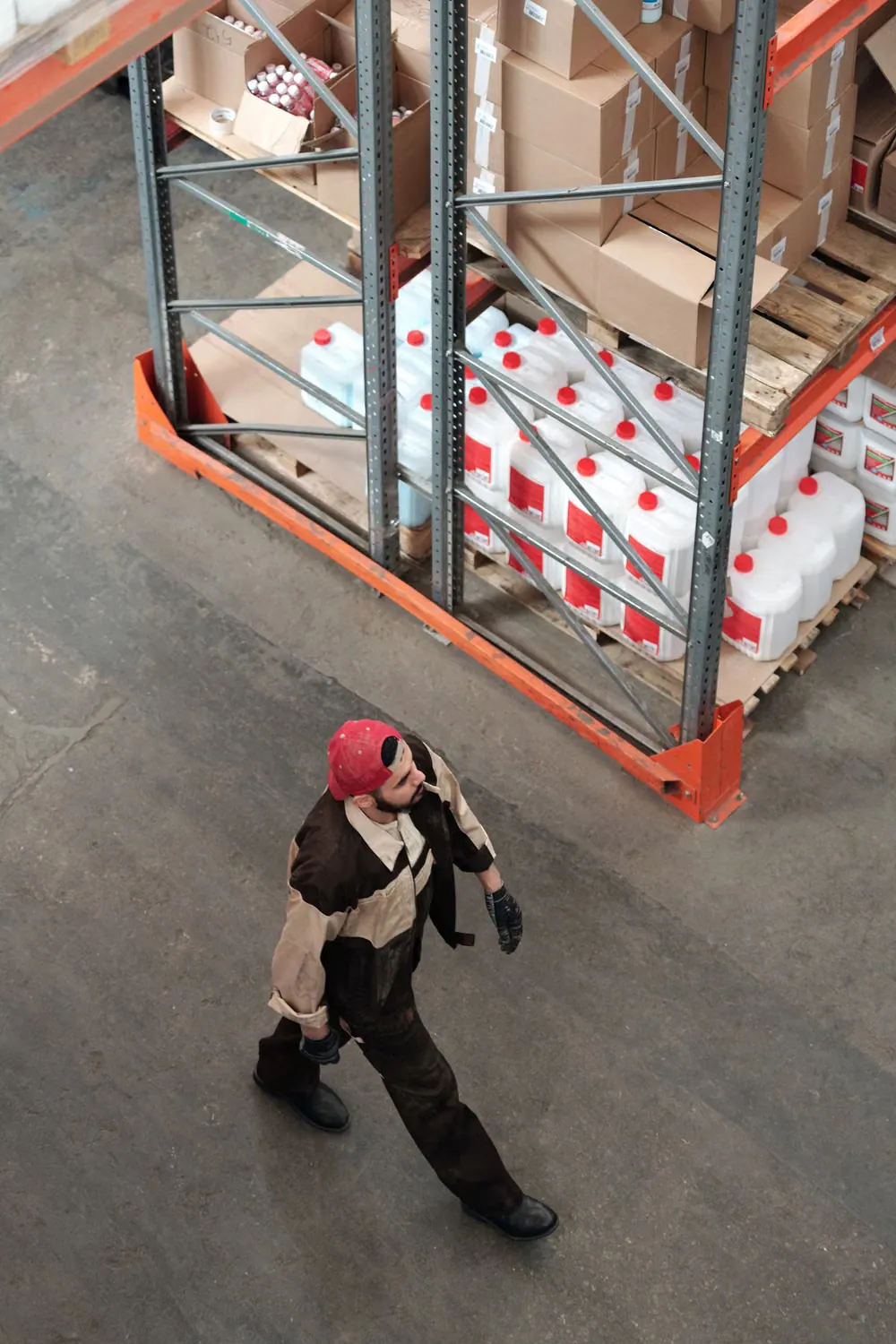
“Keep in a cool, dry place” is familiar packaging language, but it gives a warehouse manager very little to work with. How cool? How dry? For how long? What happens while cartons are unloaded, transported between buildings or held near a loading door? Buyers in hot climates need a product-specific storage brief that addresses the actual route.
The answer should not be guessed from the word biodegradable. Different formulations and finished constructions can respond differently to heat, moisture and handling. A useful procurement file connects the supplier's guidance to the buyer's shipping, storage and distribution conditions, then identifies any gap that needs assessment.
Separate raw-material guidance from finished-product guidance
A resin data sheet can provide useful technical background, but it may describe properties measured on standardized specimens or processing requirements for the resin. It is not automatically a finished-straw storage guarantee. Ask the supplier for guidance applicable to the actual straw, wrapper and packing configuration.
NatureWorks publishes grade-specific technical resources in its product and resource library. The existence of different grades and application guidance is a reminder to identify the material precisely. A temperature figure copied from one polymer grade should not be applied to every product sold under a broad material name.
Request the recommended storage conditions, any supported shelf-life information, packaging assumptions and the basis for the guidance. If the supplier cannot provide a numerical limit, record that uncertainty and discuss how the expected route will be evaluated before placing a large order.
Map the real exposure route
List the steps from factory packing to the customer's stockroom: origin storage, loading, main transport, destination handling, local delivery and outlet storage. Identify places where cartons may be exposed to conditions outside the supplier's recommendation.
Do not assume that the outdoor air temperature describes the inside of a vehicle, container or storage area. Equally, do not invent an extreme temperature and present it as a measured route condition. Use available records or arrange appropriate monitoring where the uncertainty matters commercially.
For a distributor, include the final customer's storage practice. A warehouse may be controlled while cartons later sit in an unconditioned service area. The product information supplied downstream should be practical enough for that customer to follow.
Ask for a storage and transport information sheet
| Information to request | Why it matters |
|---|---|
| Exact product and material code | Avoids applying guidance from another formulation |
| Recommended temperature and humidity conditions | Defines the intended storage environment |
| Supported storage duration | Connects purchasing volume to usable stock life |
| Packaging assumptions | Clarifies whether guidance depends on sealed inner packs |
| Handling and stacking guidance | Helps prevent mechanical damage |
| Excursion procedure | Explains what to do after an unusual exposure |
| Review contact | Identifies who can assess affected stock |
An excursion procedure should not automatically instruct staff to discard every carton after an uncertain event. It should define how to hold, document and assess affected goods. The right response depends on the product, exposure and evidence, and should be agreed with the responsible quality team.

Evaluate the packed product, not only a loose sample
The wrapper, inner bag and carton can influence the storage outcome. If the buyer is concerned about a route, discuss evaluation of the finished packing configuration. Record the sample identity, conditions, duration and checks performed afterwards.
ISTA's testing guidelines emphasize selecting protocols around the intended question and interpreting results within their scope. An informal warehouse observation and a controlled conditioning test provide different kinds of evidence. Do not describe one as the other in a sales sheet.
After an agreed exposure assessment, inspect both packaging and function. Look for deformation, damaged seals, unusual odour or changes that affect the intended drink application. Passing a visual check alone may not resolve every concern, while a cosmetic observation does not automatically establish a safety problem.
Keep stock away from avoidable exposure
Within the supplier's guidance, choose storage locations that reduce unnecessary heat, moisture, direct sunlight and contact with strong-smelling or unsuitable goods. Keep cartons protected and maintain the condition of inner packaging until use. Follow the site's established hygiene and pest-control procedures.
Use a stock rotation method that reflects batch identification and the supplier's supported storage life. Make the date and product code visible to staff who replenish outlets. A carton label is less useful if it is removed before the inner packs enter the stockroom.
Avoid buying more inventory than the business can reasonably use and store under suitable conditions. A lower unit price for a much larger order may create a storage risk or tie up cash. Compare the discount with actual demand and the cost of maintaining the required environment.
Record an excursion before drawing a conclusion
If cartons are suspected of unusual exposure, identify the affected lots, location, dates and available monitoring data. Photograph the packing condition and keep representative samples. Separate confirmed measurements from estimates such as “the truck felt very hot.”
Place the affected stock under the buyer's agreed hold procedure and contact the supplier with the evidence. Ask what additional assessment is needed. Do not release the goods based only on a general statement that a material is “heat resistant,” and do not declare an entire material category unsuitable from one poorly documented incident.
If the issue repeats, review the route and packing specification before the next shipment. A product change may be one option, but improved handling, scheduling or storage may also be relevant. The evidence should guide the response.
Include hot-climate conditions in the first enquiry
Tell HiStraws the destination, transport route if known, storage arrangement, expected stockholding period and intended drink application. Ask for guidance for the exact proposed material and packing. This gives the factory a concrete set of conditions to discuss instead of a broad request for “summer-proof straws.”
Samples are free, with shipping paid by the buyer. Printed wrappers start at 2,000 straws; custom dimensions and laser logos each start at 10,000. The final order should identify the agreed product, packing and storage information so the buyer can manage the stock through the full route, including the conditions that occur after it leaves the factory.
Research and purchasing analysis by HiStraws. Sources checked on 27 September 2026. Worked examples are illustrative, not price quotations or laboratory results.
Licensed reference photography. Images do not establish product composition, certification or ownership of the depicted facilities.