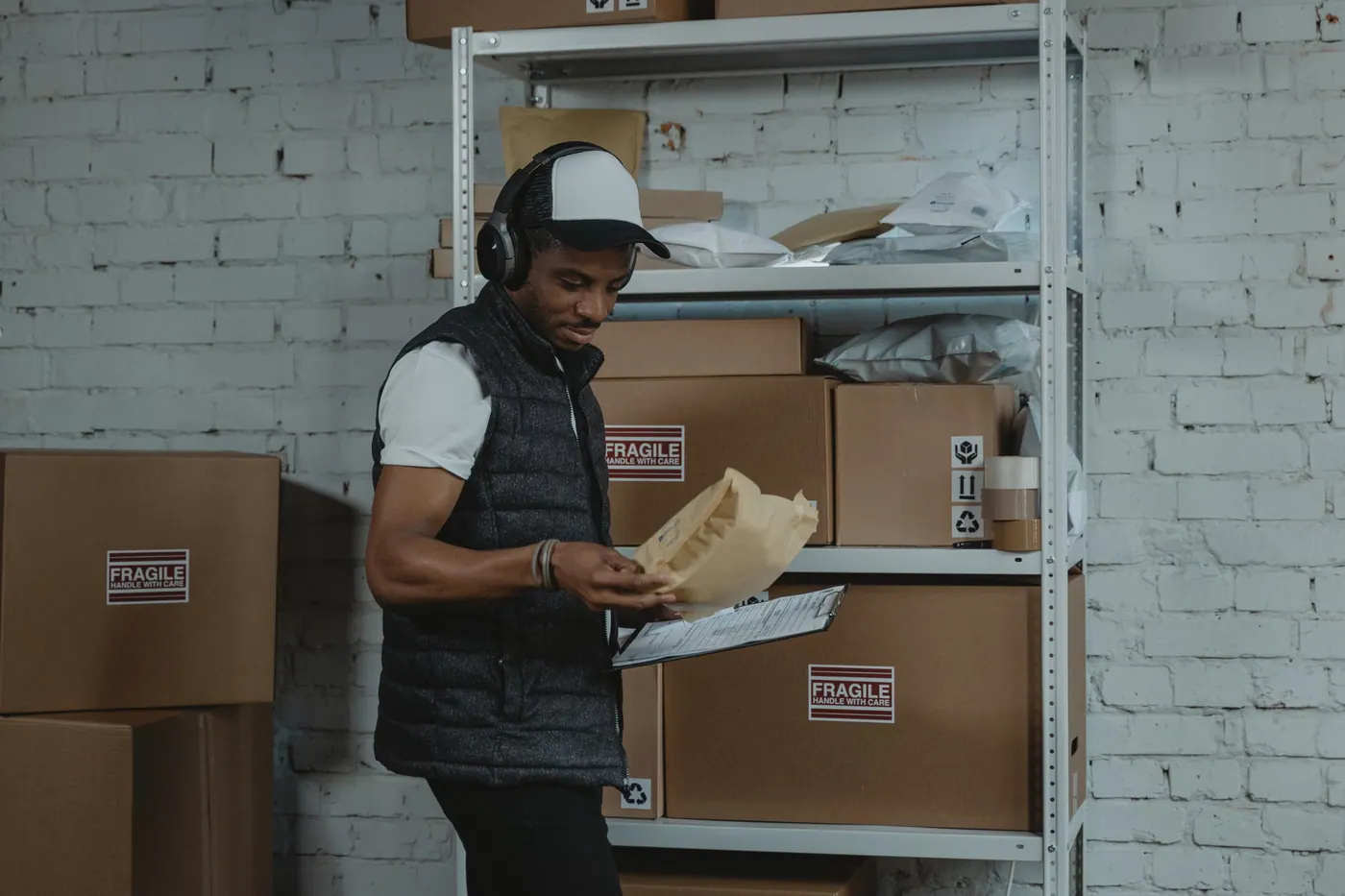
The cartons have arrived and the delivery note is signed. That confirms receipt, not acceptance of the product inside. A buyer still needs to establish whether the shipment matches the order, whether the packing survived transport and whether the relevant product checks have been completed before stock is released.
Receiving inspection works best when it is agreed before shipment. If the first discussion about tolerances and defects happens at the loading bay, both sides are already negotiating under pressure. This guide explains how to build a practical inspection record without pretending that a quick look at a few straws proves the quality of an entire batch.
Start with identity and shipment condition
Compare the purchase order, packing list, carton marks and received quantities. Check the product code, material description, dimensions, artwork revision and packing format. A perfectly made product can still be the wrong product for the order.
Record visible transport damage before cartons are moved or repacked. Photograph the overall shipment and affected areas with enough context to identify the carton and location. Keep carrier-related observations separate from product defects until the cause has been investigated.
Create a hold area or a clear stock status for goods that have not yet been released. The exact procedure depends on the buyer's operation, but the principle is simple: inspection should happen before unreviewed stock is mixed with accepted inventory or distributed to multiple outlets.
Agree the inspection basis before selecting samples
Define the lot, product variants, checks, defect categories and acceptance method in advance. If an AQL-based scheme is used, specify the applicable standard edition and parameters with a qualified quality professional. The sample size and acceptance numbers should come from the agreed method, not an arbitrary percentage chosen because it is easy to count.
ISO published the third edition of ISO 2859-1 in 2026, covering acceptance sampling schemes for inspection by attributes. Its public overview explains the framework; the full method should be obtained and applied correctly where the parties agree to use it. This article does not reproduce sampling tables or prescribe a universal plan for straws.
AQL is not a promise that a shipment contains no defects. Keep the limitations of sampling visible, especially when a potential issue has serious consequences. Different checks may need different controls rather than being collapsed into one overall pass rate.
Separate critical observations from cosmetic variation
| Inspection area | Examples of observations to record |
|---|---|
| Identity | Wrong product code, material or artwork version |
| Dimensions | Measured departure from the agreed specification |
| Physical condition | Split end, deformation or visible foreign matter |
| Packing | Open seals, damaged inner bags or incorrect quantity |
| Printing or marking | Missing logo, unreadable text or wrong language |
| Traceability | Missing batch reference or inconsistent carton identification |
| Documents | Required records absent or not linked to the shipment |
These examples are not a ready-made severity classification. Buyer and supplier should agree which defects fall into which category for the actual product and use. A cosmetic shade difference and a sharp damaged edge should not be treated as equivalent merely because both are visible.
Use photographs and plain descriptions in the defect catalogue. Where an acceptable range exists, retain examples of acceptable and unacceptable appearance. This is particularly useful for natural-looking materials where some variation may be normal but its commercial limits still need agreement.

Measure consistently and record the method
Use the agreed instruments and reference points for length, diameter and other dimensions. Thin-walled products can deform under excessive force. Check the instrument's suitability and condition, and make sure inspectors understand the method rather than simply reading numbers from a display.
Record actual measurements where they are relevant, not only a tick in a “size correct” box. If a result is near the acceptance boundary, follow the agreed procedure for confirmation. Do not repeatedly measure until a preferred result appears.
If the supplier disputes a measurement, compare methods on shared samples. Different reference points or handling can produce different readings. A clear method helps resolve the issue faster than exchanging photographs of caliper displays without context.
Keep functional checks tied to the approved application
If the receiving plan includes a drink or lid-fit check, use the defined cup, lid and conditions. A different local cup can produce a different result without proving the shipment has changed. Keep the approved reference sample and specification available to the inspector.
Do not use a receiving trial to claim a new temperature rating or environmental property. It should check conformity to the approved product and the agreed release requirements. Broader development or laboratory questions need a separate assessment.
Where reports are relied upon, confirm the sample or batch identity and scope. ILAC's role and accreditation framework explain how laboratory accreditation relates to competence within an assessed scope. A recognizable laboratory name alone does not establish that every method or claim on a document is covered.
ILAC's role and accreditation framework
Write a useful nonconformity report
If a problem is found, identify the purchase order, product code, lot or batch, affected cartons, observed quantity and inspection method. Attach clear photographs and state whether the stock is on hold. Describe the issue without guessing its root cause.
Ask for a proposed containment action, investigation and corrective response. Depending on the issue and the contract, the resolution may involve additional inspection, replacement, rework or another agreed action. Do not release uncertain stock simply because a verbal explanation sounds plausible.
Keep the disposition decision and its authorizer in the record. If a limited deviation is accepted for a specific order, define its scope and duration. It should not quietly become the new standard for future deliveries.
Use the first delivery to improve the next order
Review recurring observations with the supplier and distinguish transport, packing, manufacturing and specification issues. Update the drawing or packing instructions where a genuine ambiguity is found. Retain the original inspection record so the history remains understandable.
For HiStraws orders, buyers can provide their inspection and document requirements with the quotation brief. The relevant checks should be agreed against the material, dimensions, packing and destination. Samples are free with buyer-paid shipping; printed wrappers start at 2,000 straws, and custom dimensions or laser logos each start at 10,000. Defining acceptance early makes the arrival of the cartons a controlled step rather than the beginning of a new negotiation.
Research and purchasing analysis by HiStraws. Sources checked on 27 September 2026. Worked examples are illustrative, not price quotations or laboratory results.
Licensed reference photography. Images do not establish product composition, certification or ownership of the depicted facilities.